
Amazon Frequently Bought Together Is Not a Feature. It’s a Weapon If You Know How to Use It.
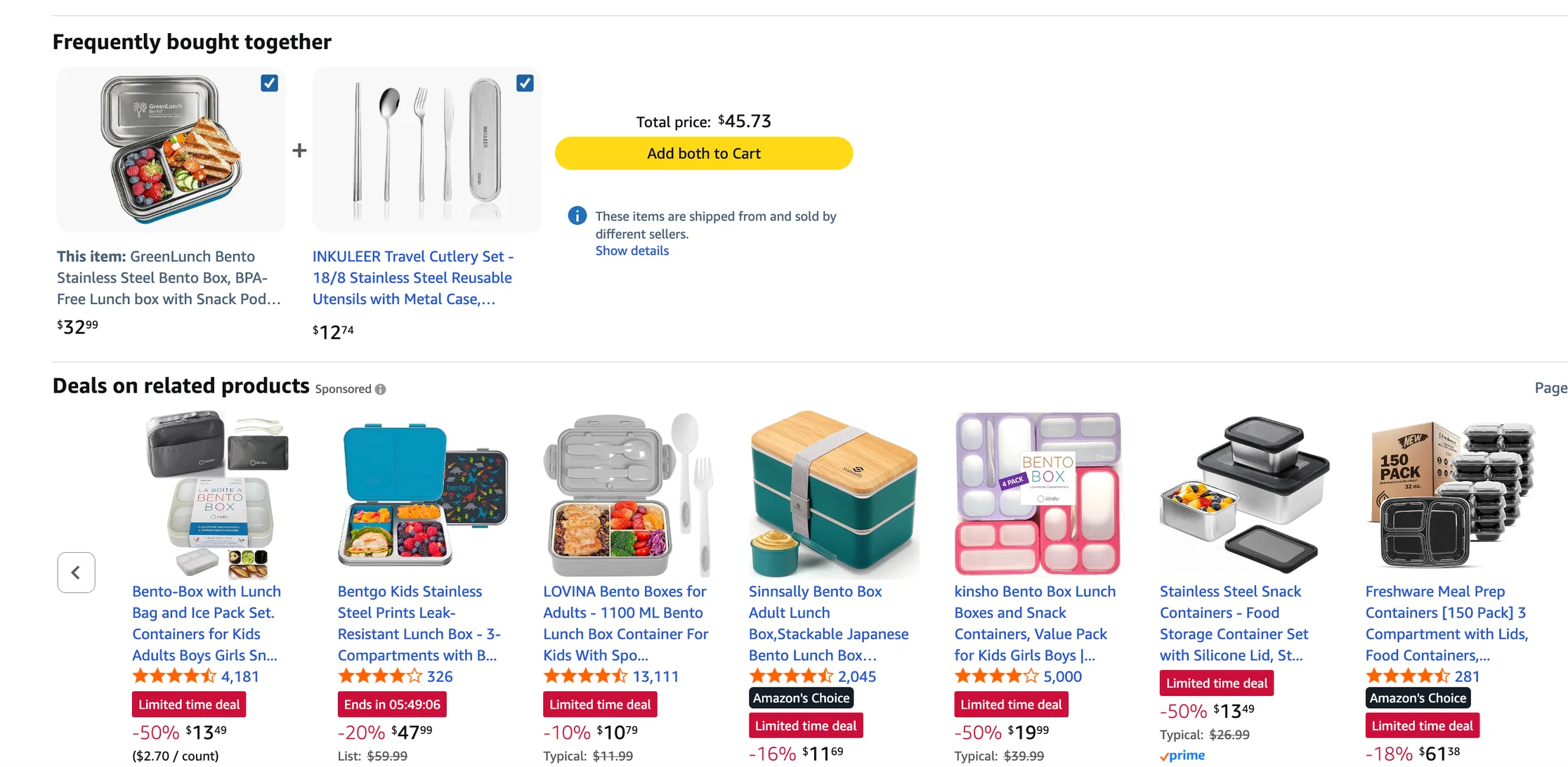
If you have sold on Amazon for any amount of time, you have seen the “Frequently Bought Together” box sitting quietly under a product listing.
Most sellers glance at it and move on.
That is a mistake.
That small box is one of the few remaining levers on Amazon that can compound visibility, increase basket size, and quietly siphon sales away from competitors without escalating ad spend.
And here is the part most sellers miss. Amazon did not build Frequently Bought Together to help sellers grow. They built it to increase average order value, reduce decision friction, and lock shoppers deeper into the platform.
If you are not actively shaping what shows up in that box, Amazon will do it for you. Often by pairing your hero product with someone else’s SKU. Sometimes even with Amazon’s own brands.
At that point, you are not just losing an upsell. You are training the algorithm to send demand away from your catalog.
What Amazon Is Really Doing With Frequently Bought Together
Frequently Bought Together is not a cosmetic recommendation. It is a behavioral model built on massive volumes of transaction data, browsing patterns, and category-level buying logic.
Every time a shopper clicks “Add All to Cart,” Amazon learns something. It learns which products belong together in a real buying journey, not a theoretical one.
Over time, those associations harden.
This is why experienced sellers do not hope to appear in FBT. They engineer it.
When you understand how Amazon decides which products get paired, you stop treating this feature as passive and start using it as a controllable system.
The Four Signals Amazon Uses to Build FBT Pairings
1. Purchase history sets the foundation
At its core, Frequently Bought Together is fueled by completed orders. When enough buyers purchase two SKUs together in the same session, Amazon begins testing that pairing.
Once it proves it can lift conversion and basket size, the pairing sticks.
This is why product design matters more than most sellers realize. Products that solve adjacent problems naturally get paired. Accessories, refills, maintenance items, add-ons, and extensions of a core use case all perform exceptionally well here.
If your product is designed to be consumed or used alongside something else, Amazon’s system will eventually notice. The question is whether it notices your SKU or your competitor’s.
2. Clickstream behavior accelerates testing
Amazon does not wait for checkout data alone. It tracks what shoppers view, compare, and add to cart along the way.
If buyers consistently move from one listing to another before purchasing, Amazon treats that as a potential pairing and begins testing it inside the FBT module.
This is why product detail page adjacency matters. If your product frequently appears in the same browsing sessions as another ASIN, you are already halfway into the system.
Sellers who understand this deliberately place their products into those browsing paths using product targeting ads and listing optimization.
3. Category affinity reinforces logic
Some categories are naturally built for bundling. Kitchen, electronics accessories, supplements, fitness, home organization.
Amazon already expects products in these categories to travel in clusters.
Sellers who win here do not fight that behavior. They lean into it. They build complementary SKUs that slot directly into existing buying patterns rather than trying to force unrelated products together.
The algorithm rewards alignment with buyer expectations far more than creativity.
4. Pricing elasticity keeps pairings sticky
Amazon wants frictionless add-ons. If two products together feel like an easy decision, the pairing survives.
This is where many sellers overcorrect. Discounting hero products to force pairings erodes margins quickly. The smarter approach is to create lower-priced complementary SKUs that act as natural add-ons without damaging the economics of your core product.
A small price difference can be enough to push a buyer over the edge and train the algorithm without sacrificing profitability.
Why Frequently Bought Together Matters More Now Than Ever
The U.S. Amazon marketplace has matured. Organic visibility is no longer something you earn once and keep forever.
Sponsored placements have crowded search results. Competition has intensified. Amazon’s own retail presence has expanded.
Frequently Bought Together is one of the few remaining areas where sellers can still generate organic, compounding visibility without constantly increasing bids.
If your product consistently appears alongside a category leader, you inherit traffic, intent, and credibility. That kind of exposure would cost thousands per month in ads if you tried to buy it directly.
This is why advanced sellers treat FBT as infrastructure, not tactics.
Why Cross-Selling Is No Longer Optional
Buyers are overwhelmed with choice. Being the obvious add-on is often the difference between being purchased and being ignored.
Cross-selling is no longer about squeezing extra revenue from an order. It is about survival.
Sellers who understand this stop thinking in single-SKU terms. They build catalogs that support each other and teach Amazon how those products fit together.
Those who do not eventually watch competitors occupy the recommendation space beneath their own listings.
U.S. Sellers Still Have an Edge Here
International sellers often compete on price and volume. U.S. sellers compete on behavioral understanding.
American buyers have specific expectations around what belongs together, how bundles should feel, and what price points make sense.
Frequently Bought Together is built on those patterns.
Sellers who understand cultural buying behavior can design better pairings, even against cheaper competitors. This is one of the few areas where insight still beats scale.
Four Practical Ways to Influence Frequently Bought Together
1. Design your catalog around pairing logic
Your catalog already contains potential bundles. Most sellers just never map them.
Look at how customers use your products, what they complain about, and what they ask before purchasing. Those signals point directly to complementary opportunities.
Use product targeting ads to place those SKUs next to each other and accelerate association.
2. Use pricing and inventory as leverage
Pairings die the moment one SKU goes out of stock. Inventory consistency matters as much as demand.
Small coupons or strategic discounts on secondary products can help a pairing break into FBT faster. Once the association is established, the discount can often be removed.
The goal is training, not permanent margin sacrifice.
3. Fulfillment alignment matters more than sellers admit
Amazon prefers bundles that arrive together, quickly, and reliably.
When delivery timelines are mismatched, conversion drops and pairings dissolve. This is why FBA or highly consistent FBM fulfillment performs better in FBT than erratic shipping setups.
Reliability is an algorithmic advantage.
4. Respect category dynamics
Some niches are FBT magnets. Others require more effort.
If you are in kitchen, supplements, fitness, or electronics accessories, bundling should be a core part of your strategy. If you are in slower-moving categories, promotions and ads will be necessary to train the system.
Either way, ignoring category behavior is how sellers stall.
Ads and Attribution Are Algorithm Training Tools
Product targeting ads are not just for conquesting competitors. They are a way to insert your SKU into an already validated buying journey.
Every time your product sells alongside another ASIN through those ads, Amazon learns that the pairing works.
External traffic does the same thing. When off-Amazon traffic drives buyers to purchase multiple SKUs in one session, the algorithm records that behavior regardless of where the session started.
The most advanced sellers use ads and attribution to deliberately rewrite FBT associations instead of waiting for them to happen organically.
A Realistic 90-Day Framework
First 30 days Audit your catalog and competitors. Identify natural pairings. Study existing FBT placements.
Days 31 to 60 Launch product targeting campaigns. Introduce coupons or light promotions on secondary SKUs. Monitor which pairings start appearing.
Days 61 to 90 Reinforce successful pairings with ads or external traffic. Remove what does not stick. Optimize pricing and inventory to protect margins.
By the end of 90 days, most sellers can lock in at least one durable FBT pairing if they execute consistently.
The Risk Sellers Need to Acknowledge
Over-bundling destroys margins. Forcing illogical pairings hurts conversion. Amazon’s own brands are always watching.
This is not a set-and-forget strategy. It requires monitoring, discipline, and restraint.
But when done correctly, it creates visibility that continues working long after ads stop running.
Final Thought
Frequently Bought Together is not luck. It is learned behavior.
If you do not teach Amazon how your products belong together, it will learn from someone else’s catalog.
And once another seller owns that box under your listing, taking it back becomes exponentially harder.
Founder at PAS Ruben Alikhanyan