

Amazon Weekly Updates: 4 Changes Every Seller Should Know to Stay Ahead
1. Amazon Vine Now Available to Resellers
Impact: High | Who should care: Resellers, aggregators, wholesale teams
For the first time, Amazon is allowing authorized resellers to enroll ASINs into the Vine review program, not just brand owners.
That’s a massive change.
Previously, Vine access was locked behind Brand Registry ownership. Now, if the brand is enrolled in Brand Registry and you’re an authorized seller, you can use Vine to generate up to 30 early reviews per ASIN.
Why this matters: This gives resellers and hybrid sellers the same competitive edge that private label brands have enjoyed for years — reviews at launch, faster conversion, and higher trust signals. Whether you’re launching bundles, exclusives, or just struggling to gain momentum, this unlocks a compliant review channel that was previously out of reach.

2. Vine Reviews Can Be Collected Before Your Product Launch
Impact: High | Who should care: Private label brands, FBA launch teams
Amazon now allows you to enroll eligible FBA products into Vine immediately after creating the listing, even before your product is live for sale.
This means you can launch with up to 30 reviews already in place, compressing your ramp-up period and increasing the odds of a successful Day 1.
Why this matters: This removes one of the biggest pain points in launching new products, starting from zero. Now you can send your units to Vine reviewers ahead of launch and build credibility before your first PPC click. In a world where shoppers sort by review count, this is a quiet but powerful shift in how product launches can be executed.
3. West Coast Port Congestion? Amazon Suggests Strategic Workarounds
Impact: Medium to High | Who should care: Importers, 3PL users, supply chain teams
Amazon issued guidance this week on how to handle increasing port congestion at major West Coast entries like the Port of LA.
Recommended strategies include:
- Diversifying your ports of entry (Oakland, Seattle, East Coast)
- Using Amazon Warehousing & Distribution (AWD) for domestic safety stock
- Leveraging air freight for urgent inventory
- Avoiding over-reliance on West Coast fulfillment routes
Why this matters: If you’re importing inventory for Q4, you cannot afford clearance delays. These tips aren’t just logistical — they’re strategic. Routing flexibility could make or break your ability to stay in stock when demand spikes.
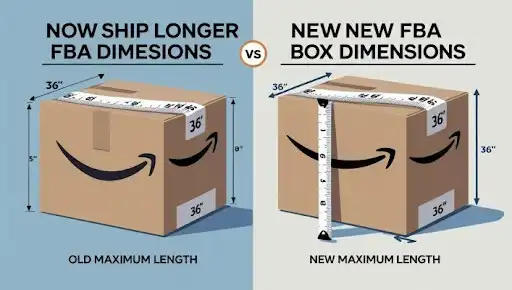
4. FBA Increases Maximum Box Length to 36 Inches
Impact: Moderate | Who should care: Brands selling oversized items, kits, or bundles
Starting June 20, FBA now allows box lengths up to 36 inches (up from 25″). This aligns more closely with industry standards and gives sellers more flexibility in packaging.
Why this matters:
- You can fit larger SKUs into standard-sized FBA packaging
- Reduces the need for custom packaging workarounds
- May improve your dimensional weight fees if you’re currently splitting shipments or under-optimizing space
If you’re selling items like long kitchenware, home decor, or complex bundles, this change could help streamline FBA integration and reduce fees.
Final Takeaway
None of these updates is flashy. But all four are deeply operational, and operational leverage is how most sellers actually win.
If you’re launching, restocking, or prepping for Prime fall events, I’d prioritize:
- Tapping into Vine reviews early (even pre-launch)
- Updating logistics routes if you import
- Reassessing packaging dimensions to take advantage of FBA’s new limits
These are the kinds of updates we use across our agency to keep our partners ahead.