
Amazon’s AI Chatbot Rufus Is Quietly Changing How Shoppers Buy
Black Friday data tends to produce loud headlines.
Record spend. Traffic spikes. Conversion swings.
But buried inside this year’s numbers was a much more important signal for Amazon sellers, one that most people will gloss over.
Amazon’s AI chatbot, Rufus, did not just participate in Black Friday shopping. It materially influenced purchasing behavior.
And that should make every seller pause.
The stat that matters most
According to Sensor Tower data, Amazon sessions that included Rufus and resulted in a purchase surged 100% compared to the prior 30 days.
Sessions that resulted in a purchase but did not include Rufus increased by only 20%.
That is not a marginal difference. That is a structural one.
Rufus driven sessions also grew faster day over day and outpaced overall website traffic growth on Black Friday.
In simple terms, shoppers who interacted with Amazon’s AI assistant were significantly more likely to convert than those who did not.
That alone tells us this is not a novelty feature anymore.
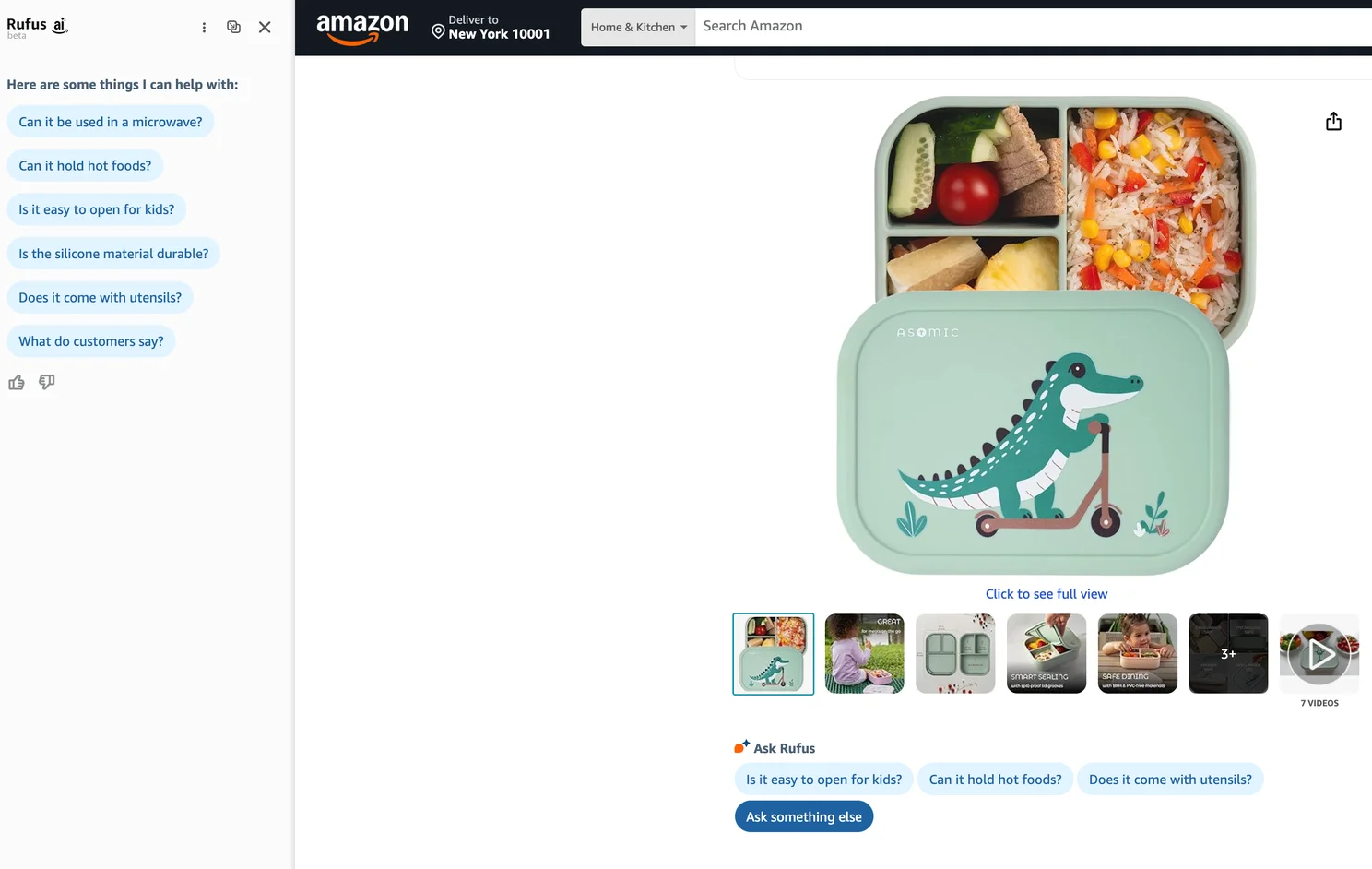
Rufus is not search. And that is the point.
Most sellers still think about Amazon discovery through the lens of keywords.
Search term Ranking Ad placement
Rufus does not operate that way.
Rufus is conversational. It answers questions. It compares products. It reframes the buying journey around intent rather than keywords.
When a shopper asks Rufus for recommendations, they are not scrolling search results. They are delegating decision making to Amazon’s system.
That is a fundamental shift.
And once that shift happens, visibility is no longer just about ranking. It is about whether your product fits the answer Rufus wants to give.
Why Amazon is pushing Rufus now
This is not about AI hype.
Amazon is dealing with a more constrained consumer. Adobe data shows that while Black Friday spend hit $11.8 billion, order volume was actually down year over year, and prices were higher.
Consumers are more cautious. They research more. They hesitate longer.
Rufus shortens that hesitation.
AI driven traffic to retail sites was up more than 800% year over year. Shoppers coming from AI sources were 38% more likely to convert.
From Amazon’s perspective, Rufus does three things at once:
- Reduces friction in decision making
- Increases basket confidence
- Keeps shoppers inside Amazon’s ecosystem longer
That is exactly what you build when growth through raw traffic is slowing.
What Rufus means for sellers in practical terms
Rufus does not reward keyword stuffing.
It rewards clarity.
It pulls from product titles, bullets, descriptions, reviews, and comparison logic. It looks for signals that help it explain why one product is better suited than another for a specific use case.
That changes how listings should be built.
Sellers who rely on generic benefit statements and vague positioning will struggle here. Rufus needs context.
Why this product For whom Compared to what In which situation
If your listing cannot answer those questions cleanly, Rufus will not surface it confidently.
This is where many sellers will fall behind
Most sellers will react to Rufus the same way they reacted to previous Amazon changes.
They will wait.
They will treat it as something Amazon controls and therefore something they cannot influence.
That is a mistake.
Rufus is trained on existing data. Listings. Reviews. Comparison language. Buying patterns.
Sellers who adapt how they structure their content, how they differentiate products, and how they frame use cases will shape how Rufus understands their catalog.
Those who do nothing will be described by the system rather than chosen by it.
Rufus and advertising are not separate
This is the part many sellers will miss.
Rufus driven sessions that converted were not happening in a vacuum. They were happening alongside ads, deals, and visibility mechanics Amazon already controls.
If Rufus is increasingly guiding shoppers toward decisions, then ads are no longer just about clicks. They are about influencing what the AI sees as relevant and reliable.
Think of ads as training data, not just traffic.
Products that consistently convert when surfaced gain credibility inside the system. That credibility feeds future recommendations, both paid and organic.
The long term implication
Amazon is moving toward assisted commerce.
Less scrolling. Less manual comparison. More delegation to systems like Rufus.
For sellers, this means the game is shifting from visibility alone to interpretability.
Can Amazon understand your product well enough to recommend it without a search query?
That is the question sellers should be asking going into 2026.
Final thought
Rufus driving Black Friday sales is not a holiday anomaly. It is a preview.
Amazon is testing how much of the buying journey it can automate without hurting trust. So far, the data suggests it is working.
Sellers who adapt early will benefit from being understood by the system.
Those who ignore it will slowly become invisible in conversations they are not part of.
Founder at PAS Ruben Alikhanyan